
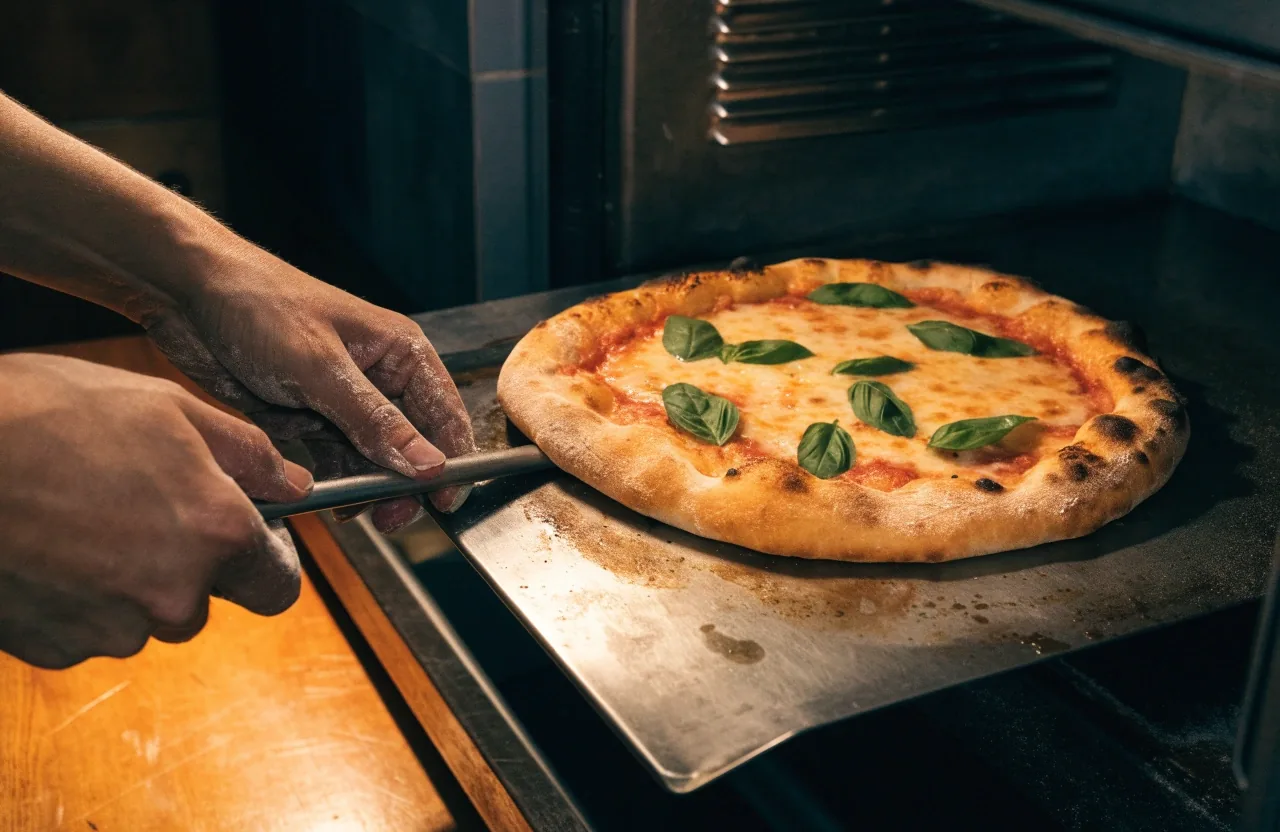
A preview of the book
What's Inside the Pizza Cookbook
This page is a preview, not a sales pitch. You can see how the book is organized, what each chapter covers, and what a typical recipe page looks like before you decide anything. If you want to know whether the collection fits your kitchen and your skill level, start here.
How the book is organized
The cookbook moves from dough to style to technique. Early chapters cover the fundamentals: hydration, fermentation, bulk rise, cold proof, and shaping. Middle chapters take on regional styles one at a time. Later chapters handle sauces, toppings, and the specific techniques that make a high-heat bake work at home.
Each chapter stands alone, so you can jump to Detroit-style without reading Naples first, though the dough chapters are worth reading in order. That structure is why the same book works for a first-time baker and for someone who already keeps a scale on the counter.
Part one
Dough fundamentals
Formulas, hydration, fermentation, and the shaping moves that decide how a crust opens in the oven.
Part two
Regional styles
One chapter per style — Naples, Rome, New York, Detroit, Chicago, and pizza fritta — each with its own dough and recipe set.
Part three
Sauce, cheese, and technique
Sauces cooked and raw, cheese balance for a clean melt, and the bake adjustments that bring high heat home.
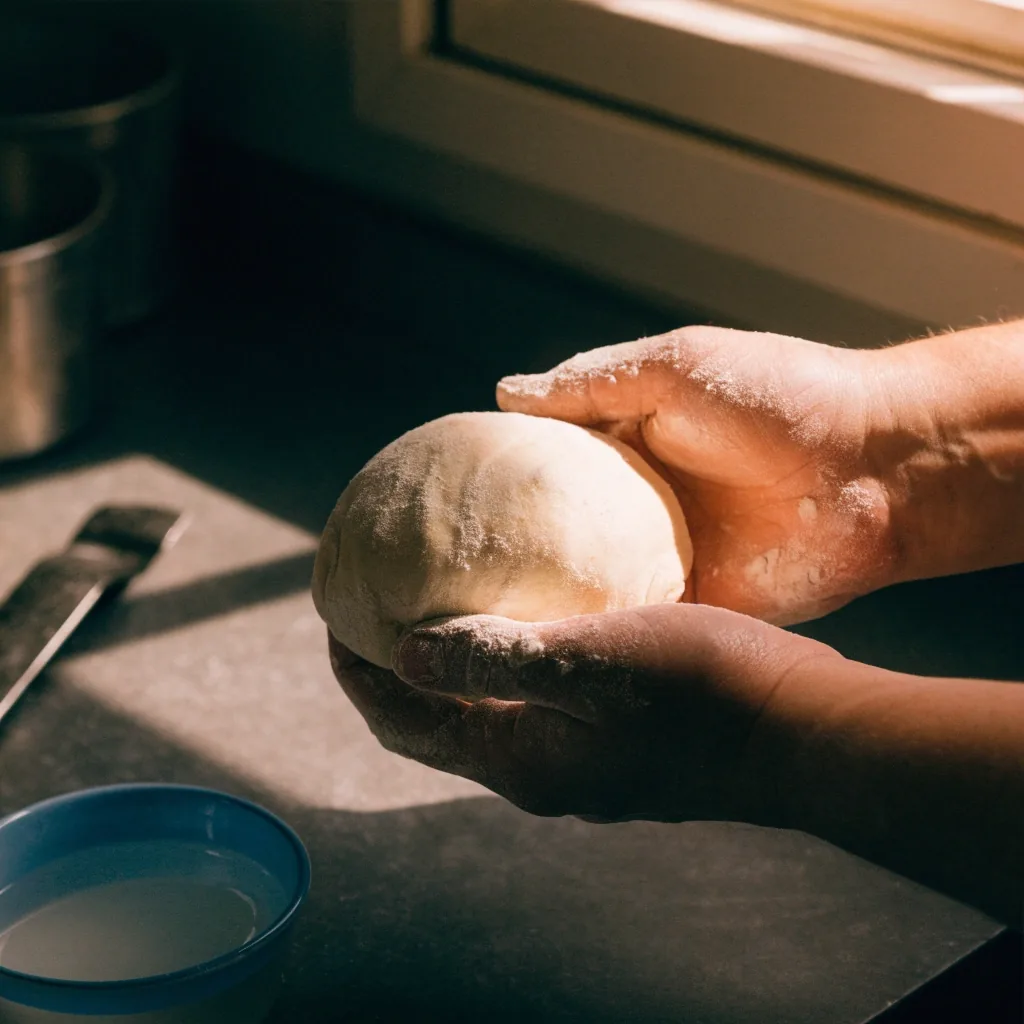
The dough chapters
These are the foundation. You get formulas for a basic home dough, a higher-hydration dough for Neapolitan-style pies, a pan dough for Detroit-style, and a fried dough for pizza fritta. Each formula lists hydration, salt percentage, and fermentation time so you can see how the numbers change between styles.
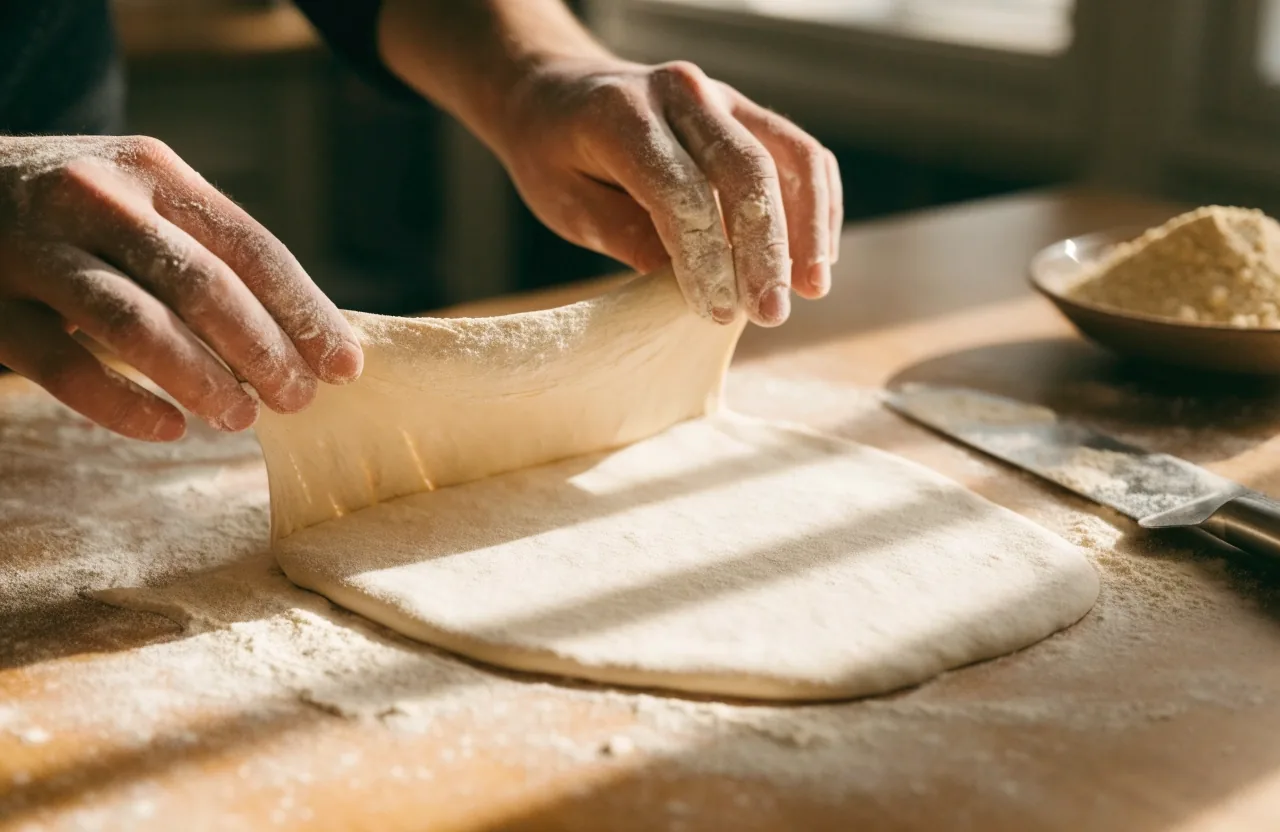
The book also explains stretch and fold, how to tell when bulk rise is done, and how cold proof changes flavor. Marco's Pizza kitchen testing favors the long cold proof for flavor depth, but every formula includes a same-day route for a shorter bake.
Basic home dough
The starting formula: moderate hydration, a workable feel, and timing that fits an ordinary weeknight.
Higher-hydration dough
Looser dough for Neapolitan-style pies, with notes on handling a wetter mix without tearing the base.
Pan dough
A softer, oiled dough built for Detroit-style pans, tuned so the bottom fries and the top stays airy.
Fried dough
The pizza fritta base — proofed, shaped, and fried in oil so it puffs before it ever meets the sauce.
The regional style chapters
Naples, Rome, New York, Detroit, Chicago, and pizza fritta each get their own chapter. Each one opens with a short explanation of what makes the style distinct, then gives you a dough formula and a set of recipes.
Roman tonda gets attention for its crisp, light profile. Detroit-style gets a full pan-pizza treatment with the crispy cheese edges. Pizza fritta shows you a fried pizza that skips the oven entirely.
See the pizza styles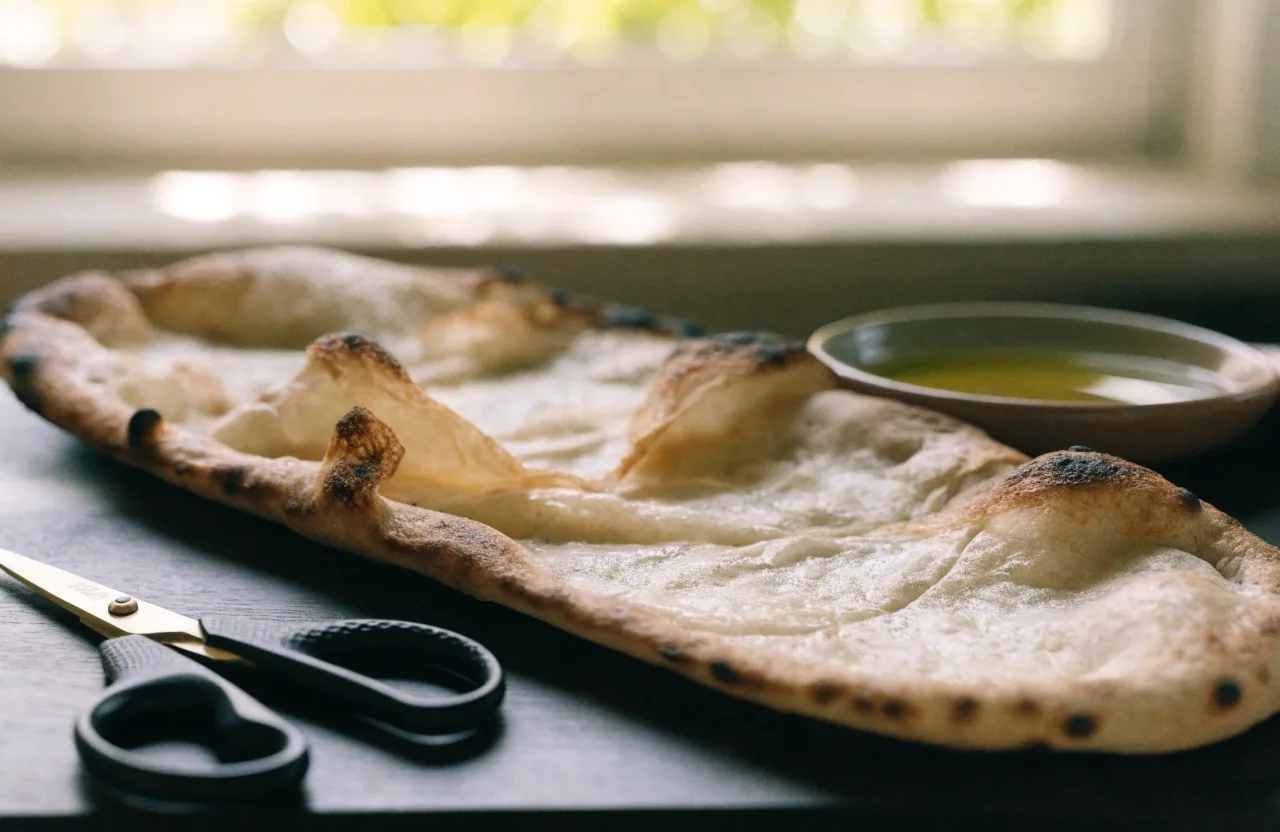
Naples, Rome, New York
Three oven-and-oven-less traditions side by side: a blistered high-heat pie, a crisp Roman tonda, and the big foldable New York slice.
Detroit, Chicago, pizza fritta
Pan-built and deep-dish pies with a fried edge, plus the folded fritta that cooks in oil instead of an oven.
Recipe page format
Every recipe follows the same structure: yield, timing, ingredients by weight, and numbered steps. Where a step is easy to get wrong, there is a short note explaining what to look for. The book uses weight measurements throughout, which matters more in dough than anywhere else in cooking.
Yield and timing
Each recipe opens with how many pies it makes and the realistic window from mix to bake, including the resting time you should not skip.
Ingredients by weight
Grams and percentages rather than cups, so a formula scales cleanly and the same dough behaves the same way next time.
Numbered steps
Steps stay in order and short, each one a single action so you can read the next line without losing your place mid-shape.
Watch-for notes
Where a step goes wrong easily, a short note names the cue: how the dough should feel, smell, or sound as you work it.
Sauces, cheese, and toppings
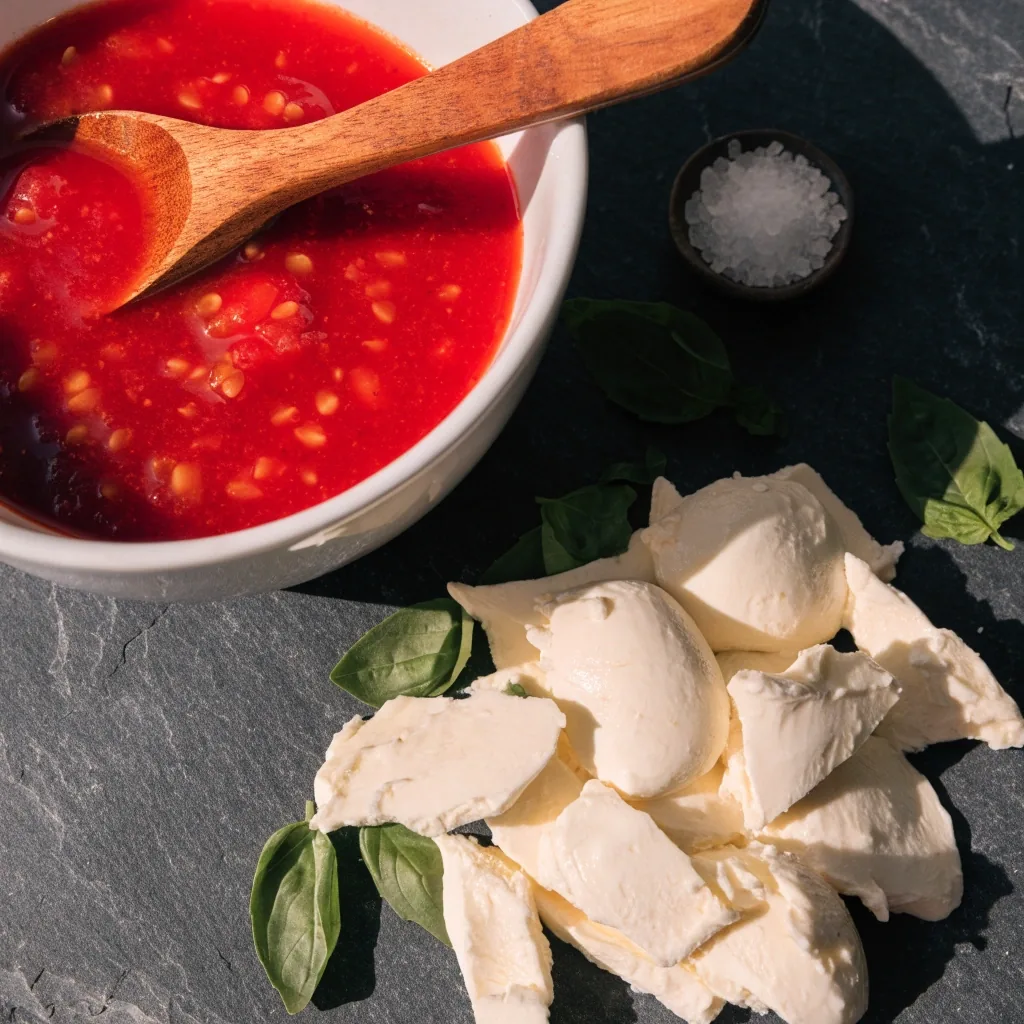
A pizza is not just crust. The book covers a basic cooked tomato sauce, a raw sauce for Neapolitan-style pies, and a few variations. Cheese gets its own section, including how to balance mozzarella with other cheeses so you get a proper melt without a soggy center. Toppings are organized by style, so you are not guessing what belongs on a Detroit-style pie versus a Roman tonda.
The sauce chapter also walks through when a cooked sauce beats a raw one, how much water to cook off, and how salt and acidity change the way the cheese melts on top. The point is that toppings follow the style rather than the other way around.
Cooked tomato sauce
A simmered base that carries heavier toppings and holds up under a longer bake.
Raw sauce
Uncooked and bright, spooned thin for Neapolitan-style pies that finish fast in high heat.
Cheese balance
Mixing mozzarella with firmer cheeses so the center sets instead of pooling water.
Toppings by style
Each style chapter lists the toppings that belong to it — the classic Naples set, the Detroit pepperoni and brick-cheese pairing, and the lighter finishes that suit a Roman tonda.
Skill level and what it assumes
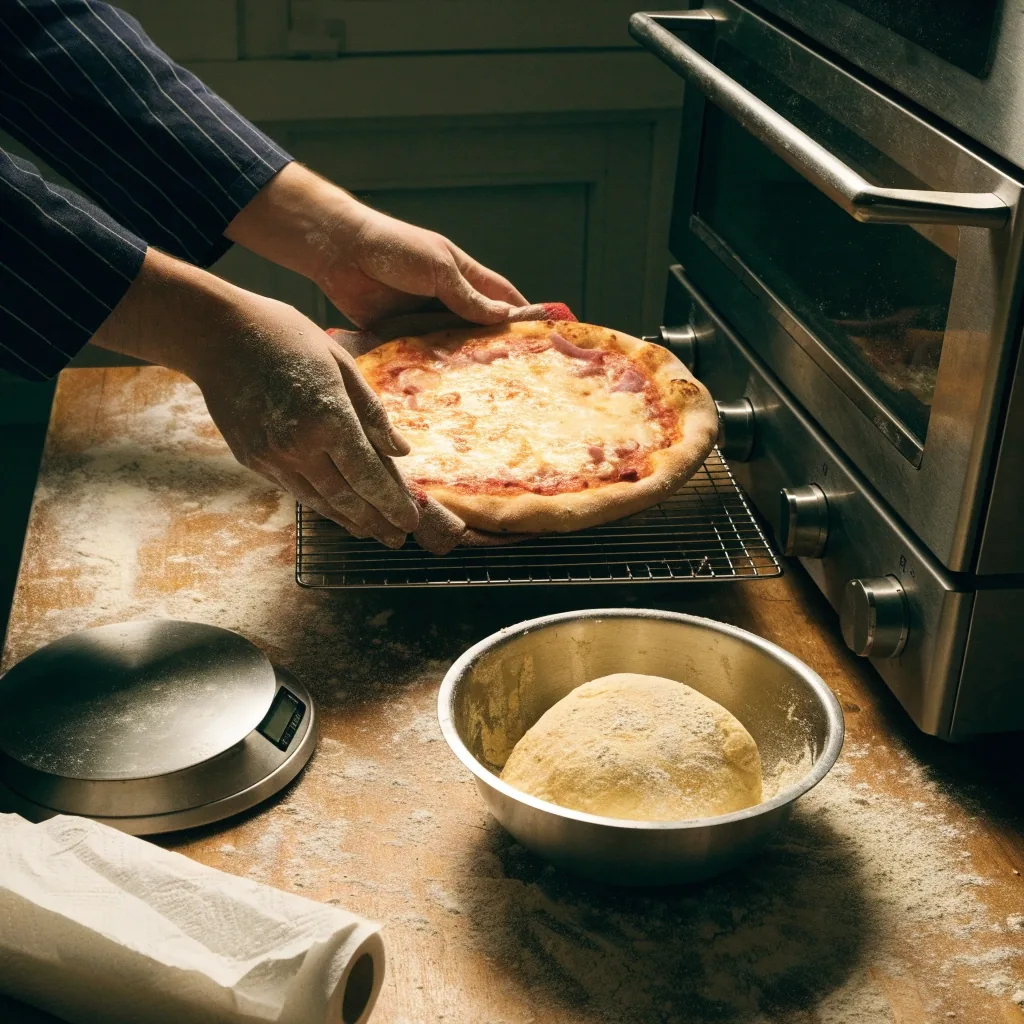
The book assumes you can use a kitchen scale and follow a recipe. It does not assume you own a wood-fired oven, a proofing box, or a pizza steel. Recipes are marked where equipment changes the result, so you know before you start whether a standard home oven will do the job.
Where a steel, a stone, or a hotter oven shifts the bake, the note appears right at the step rather than buried in the front matter. You can bake every dough in this collection in a normal home oven; some styles simply get closer to their reference texture with more heat.
How it compares to other pizza books
The Pizza Bible by Tony Gemignani is a technical benchmark for enthusiasts. Pizza! Pizza! Pizza! by Sara Haas leans approachable and family-friendly, with sauces, salads, and desserts alongside the pizza. The Pursuit of Pizza collects recipes from World Pizza Champions and pushes toward competition-level technique. This collection sits between those poles: it takes dough seriously, but it is written for a home cook with a normal oven.
The Pizza Bible
Tony Gemignani
Technical depth for readers who want to chase a benchmark result and study the why behind each variable.
Pizza! Pizza! Pizza!
Sara Haas
Family-friendly and approachable, with sauces, salads, and desserts sitting alongside the pizza recipes.
The Pursuit of Pizza
World Pizza Champions
A collection that leans toward competition-level technique and pushes readers past the home-kitchen baseline.
Marco's Pizza — The Cookbook
Marco's Pizza kitchen
Global style coverage with serious dough chapters, aimed at a home cook working from an ordinary oven.
Sample pages you can try now
The Recipes & Techniques page includes a rotating selection from the book, including a pan pizza and a basic sauce. Try one before you buy and see whether the instructions make sense in your kitchen — the timing notes and the weight measurements are the parts worth testing first.
Pan pizza, start to finish
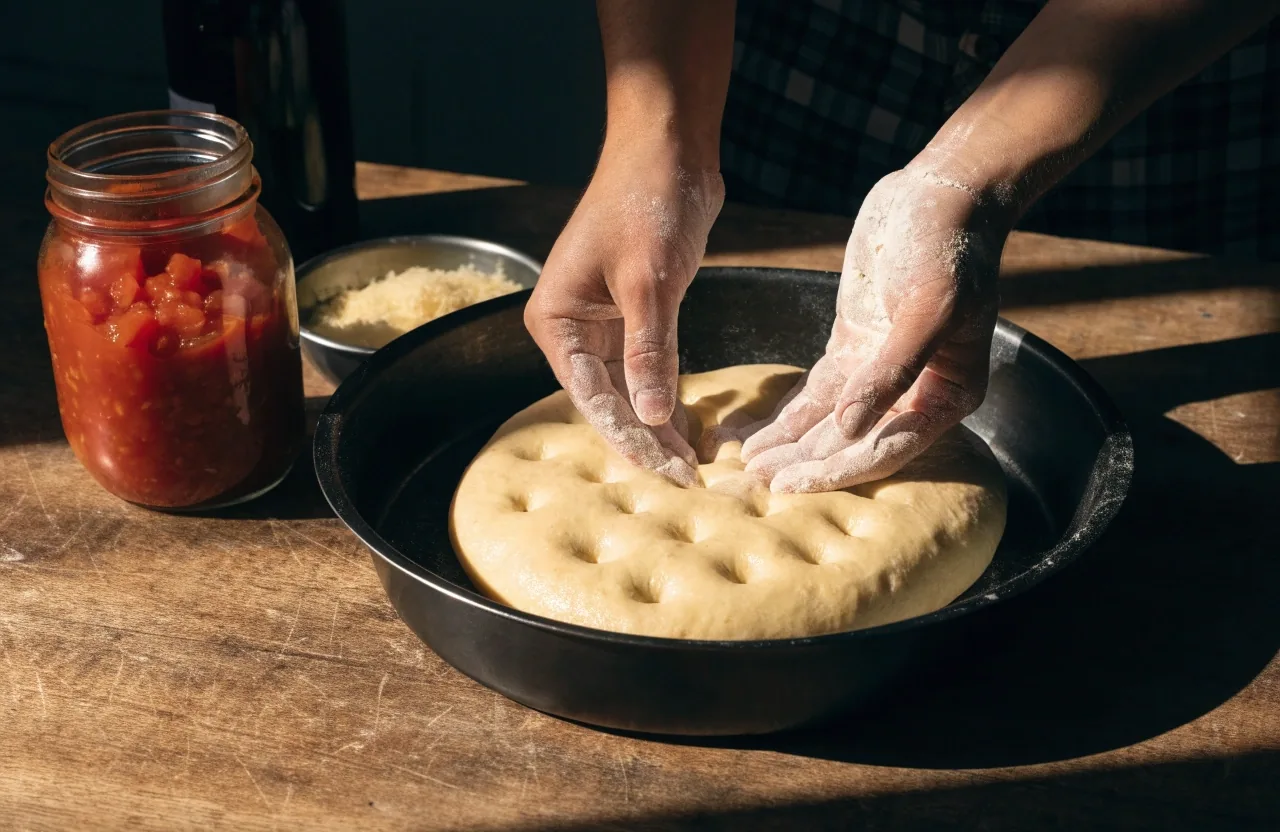
A full Detroit-style walkthrough: mixing the oiled pan dough, letting it relax in the pan, laying the cheese to the edge, and reading the moment the bottom turns crisp.
Try a sample recipeBasic tomato sauce
The cooked base from the sauce chapter, scaled down to a single batch so you can judge the seasoning before committing to the full recipe set.
See the sample sauce
Judged the book yet? Here is the next step.
If the structure makes sense for your kitchen, you can order the cookbook through the contact page, or read the author's notes first if you want the story behind the recipes. Either way, the sample recipes are free to try before you decide.
Questions before you buy
A few things readers ask before they commit to a cookbook, answered from what is actually in the book.
Do I need a wood-fired oven to use this book? +
No. Every dough in the collection is written to work in a standard home oven. Recipes are marked where a steel, a stone, or higher heat changes the result, so you can see that before you start and adjust your expectations rather than your equipment.
Are the measurements in cups or grams? +
By weight. Ingredients are listed in grams with percentages for the dough formulas, which is why a kitchen scale is the one tool the book assumes you already own. Weight makes a formula repeatable and lets you scale a batch without guessing.
Can I start with a regional style instead of the dough chapters? +
Yes. Each chapter stands alone, so you can jump straight to Detroit-style or pizza fritta. The dough chapters are worth reading in order first if you are new to working with a higher-hydration mix, since the later formulas assume that comfort.
How do I order the book, and can I ask a question first? +
Use the contact page to ask about ordering or to send a question about the collection. The address, phone, and email for Marco's Pizza — The Cookbook are all listed there, along with working hours if you would rather call.