Try before you buy
Pizza Recipes and Techniques to Try
You do not have to buy the cookbook to cook from it. This page holds a rotating selection of recipes and techniques pulled from the collection, so you can try one in your own kitchen first. Start with the pan pizza if you are new, or the sauce if you want something quick.
Five things you can cook from this page tonight
Each entry below is a real chapter from the book, written out here as a working method rather than a teaser. The proportions and timings are the ones we use. Nothing is locked behind a purchase.
- Pan pizza The forgiving first bake — a wet dough that spreads itself into an oiled pan and comes out thick and crisp.
- Cooked tomato sauce Canned tomatoes, salt, a short simmer. Deliberately plain so the cheese can carry the pie.
- The cheese pull Why some mozzarella melts into strings and some floods the crust, and how to blend for both flavor and melt.
- High-heat bakes Getting a home oven and a stone or steel genuinely hot before the dough ever touches them.
- Balance Sauce, cheese and topping amounts weighed rather than spooned, so a good pie repeats.
Pan pizza: the forgiving one
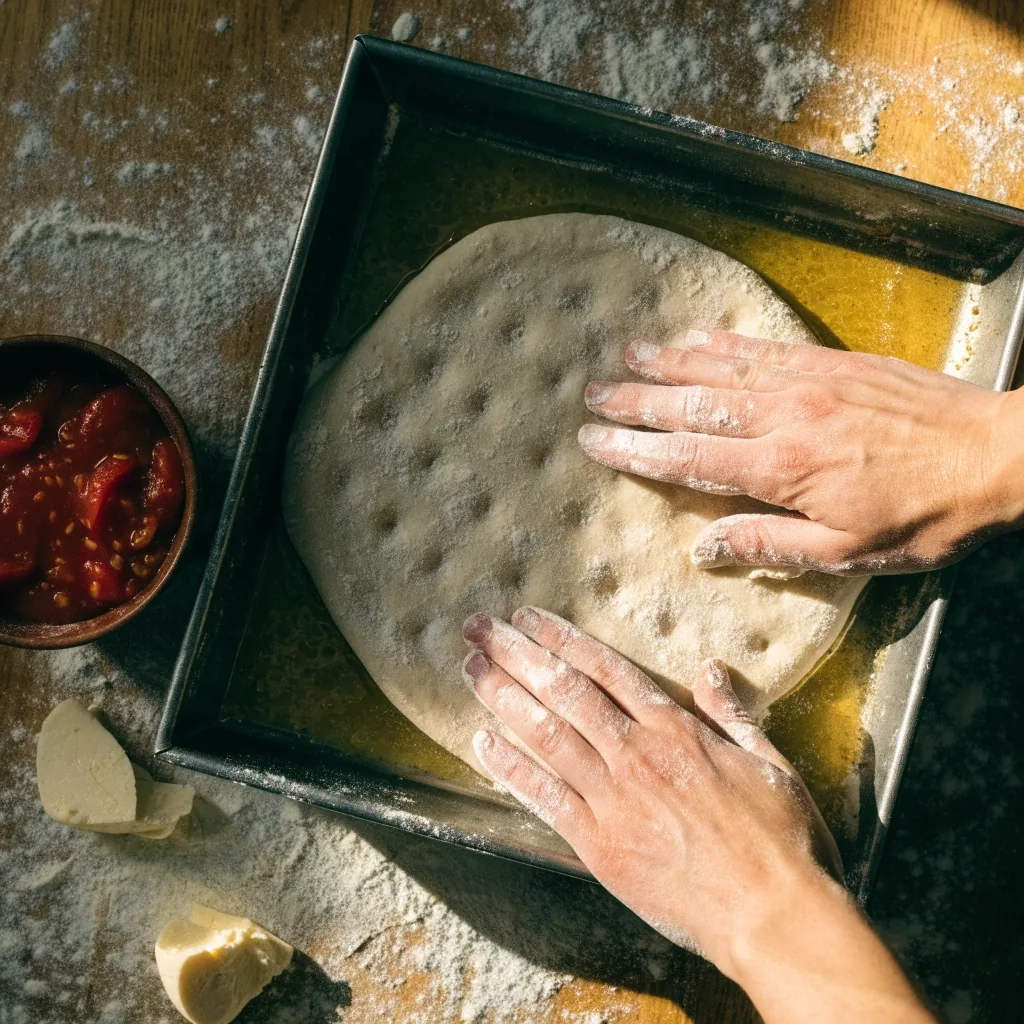
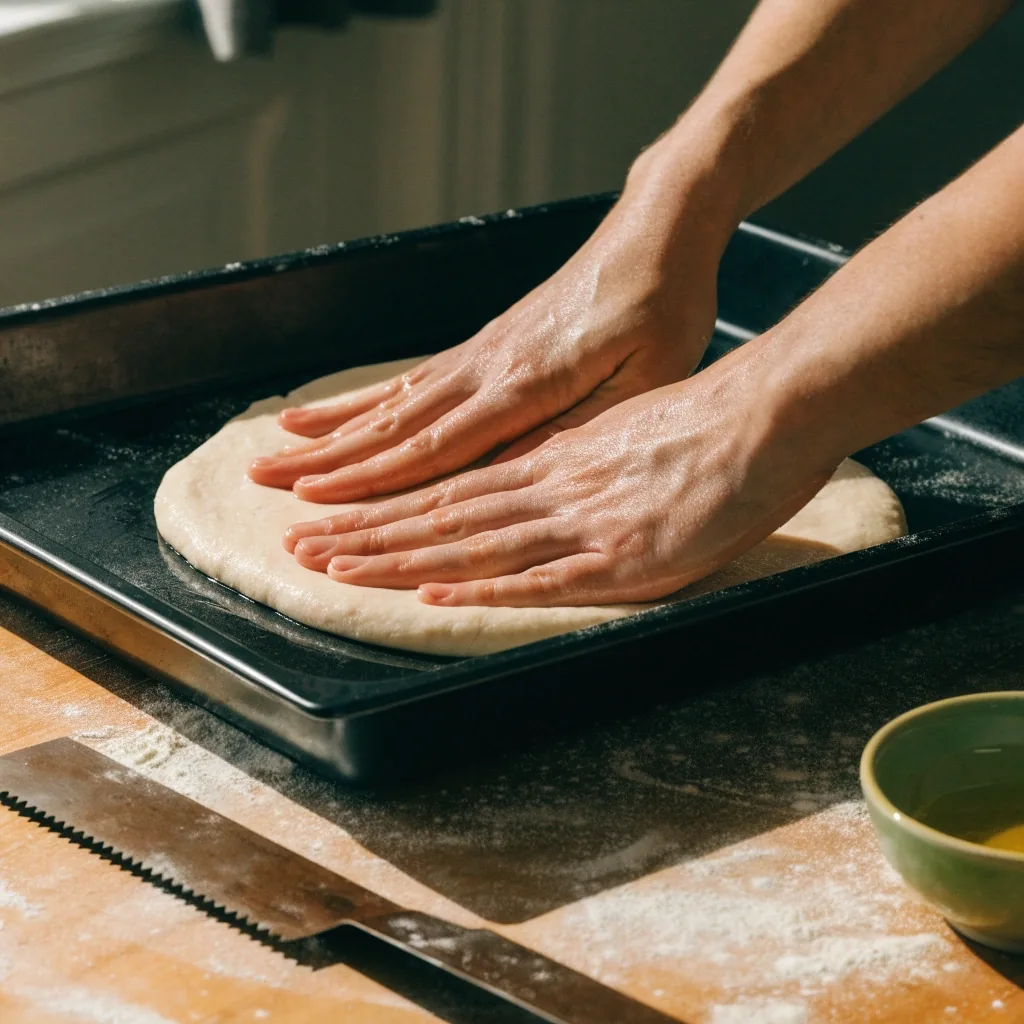
Pan pizza is a good first project because the pan does most of the work. The dough is wetter and more relaxed than a hand-stretched pie, so it spreads to fit instead of fighting you. You press it into an oiled pan, let it rise again, and bake it hot.
The result is a thick, airy crust with a crisp bottom and cheese that runs to the edges. Detroit-style is the most famous version, but the technique applies to any rectangular pan you own.
See what's inside the bookWhy the pan helps
The walls hold the dough in place, so a slack, wet mix can relax outward on its own instead of needing a confident stretch.
The second rise
Pressing the dough into the pan and letting it sit again before baking is what gives the crumb its open, airy structure.
Any pan you own
A rectangular sheet pan, a cast-iron skillet or a proper Detroit pan all work. What matters is the oil and the heat, not the brand.
A basic cooked tomato sauce
Good pizza sauce does not need much. Canned tomatoes, a little salt, maybe some olive oil, and a short simmer. The mistake most people make is overseasoning it, which competes with the cheese instead of supporting it. The book's basic sauce is deliberately plain.
A raw sauce, uncooked and lightly seasoned, is the right choice for Neapolitan-style pies. Two sauces, two jobs, and the difference is only a pan and ten minutes.
Getting a real cheese pull
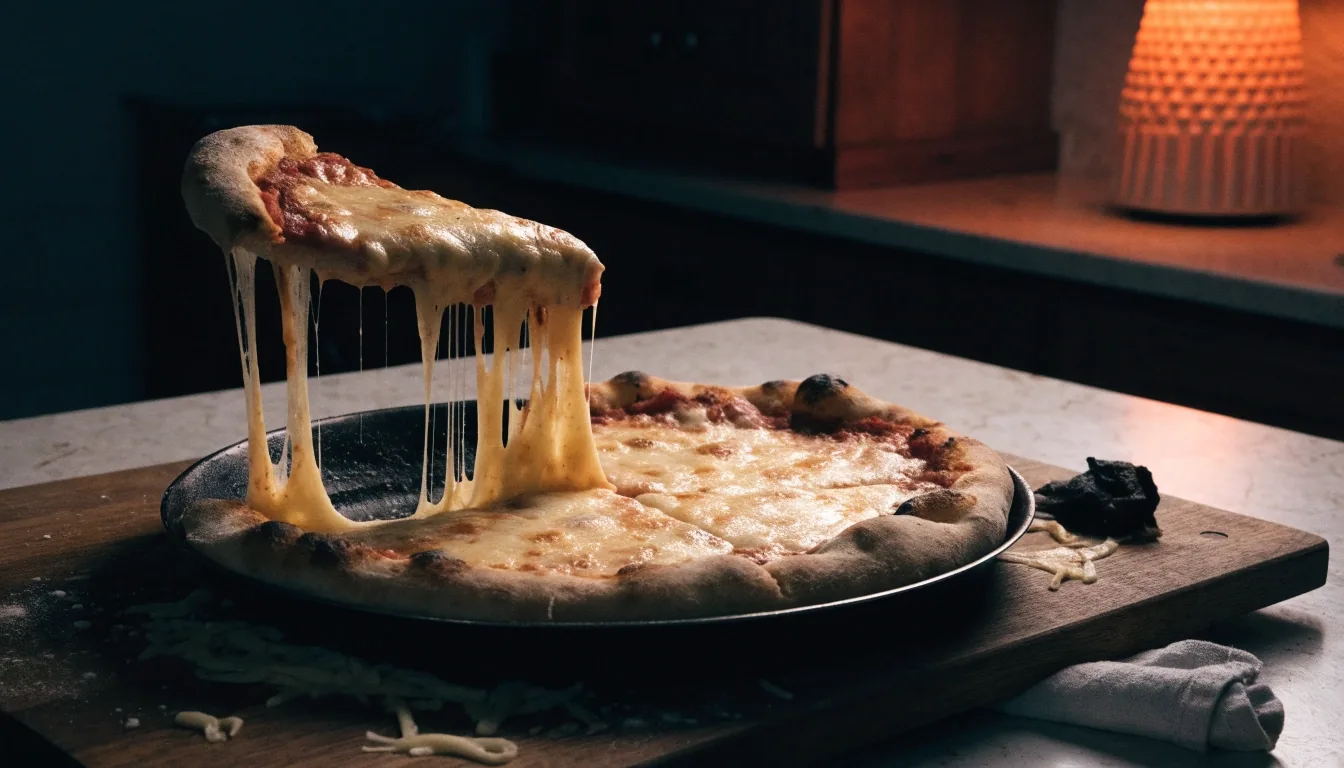
A cheese pull comes from mozzarella that melts evenly without releasing too much water. Fresh mozzarella is delicious but wet, so it helps to drain it or tear it into pieces rather than slicing it thick. Low-moisture mozzarella melts more predictably.
Blending the two gives you flavor and melt at the same time. Put the cheese down before wet toppings, and do not overload the center — a heavy middle is what turns a good pie into a puddle.
- Fresh mozzarella
- Drain it, tear it, and blot it dry. Big flavor, but it carries water into the bake, so use it with a hot, fast oven.
- Low-moisture mozzarella
- Predictable melt and even browning. Less character on its own, which is exactly why it pairs so well with the fresh stuff.
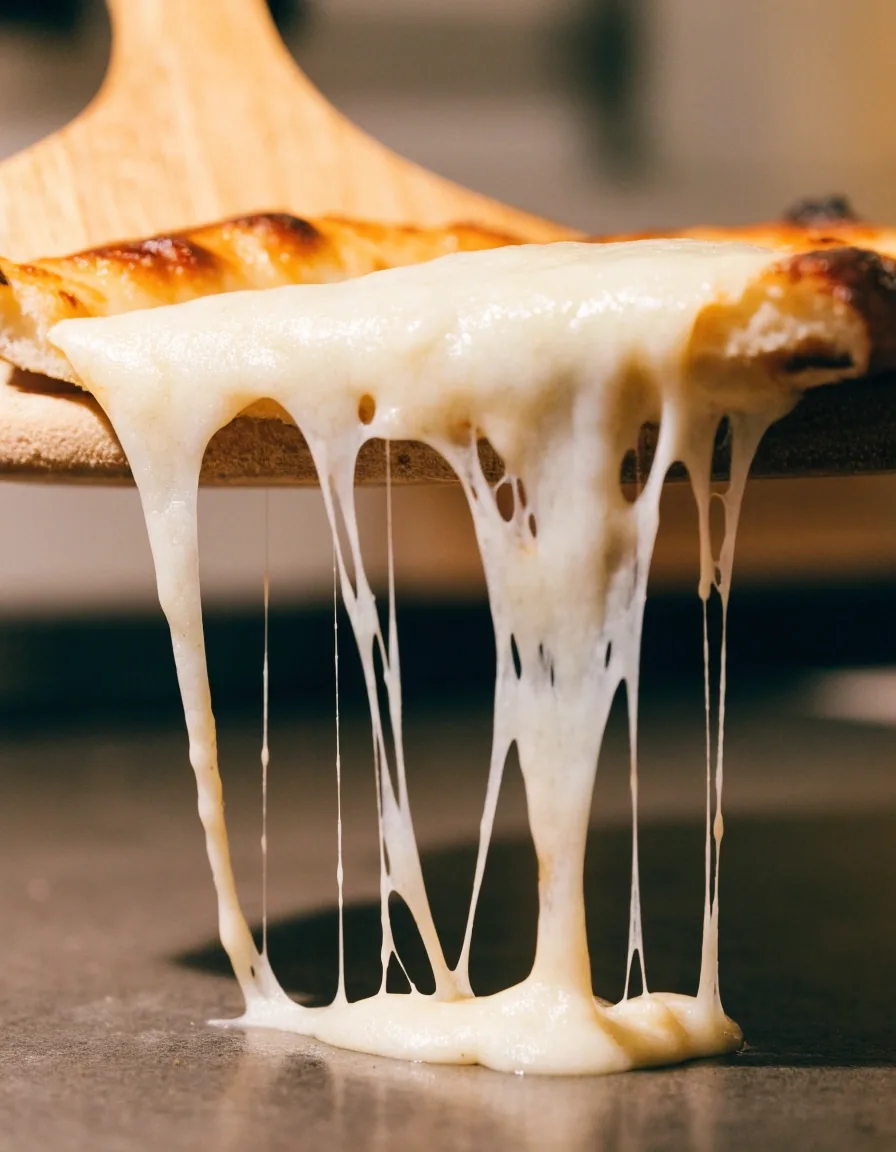
Torn mozzarella drains faster than sliced, and it melts into uneven pockets instead of one flat sheet.
High-heat bakes at home
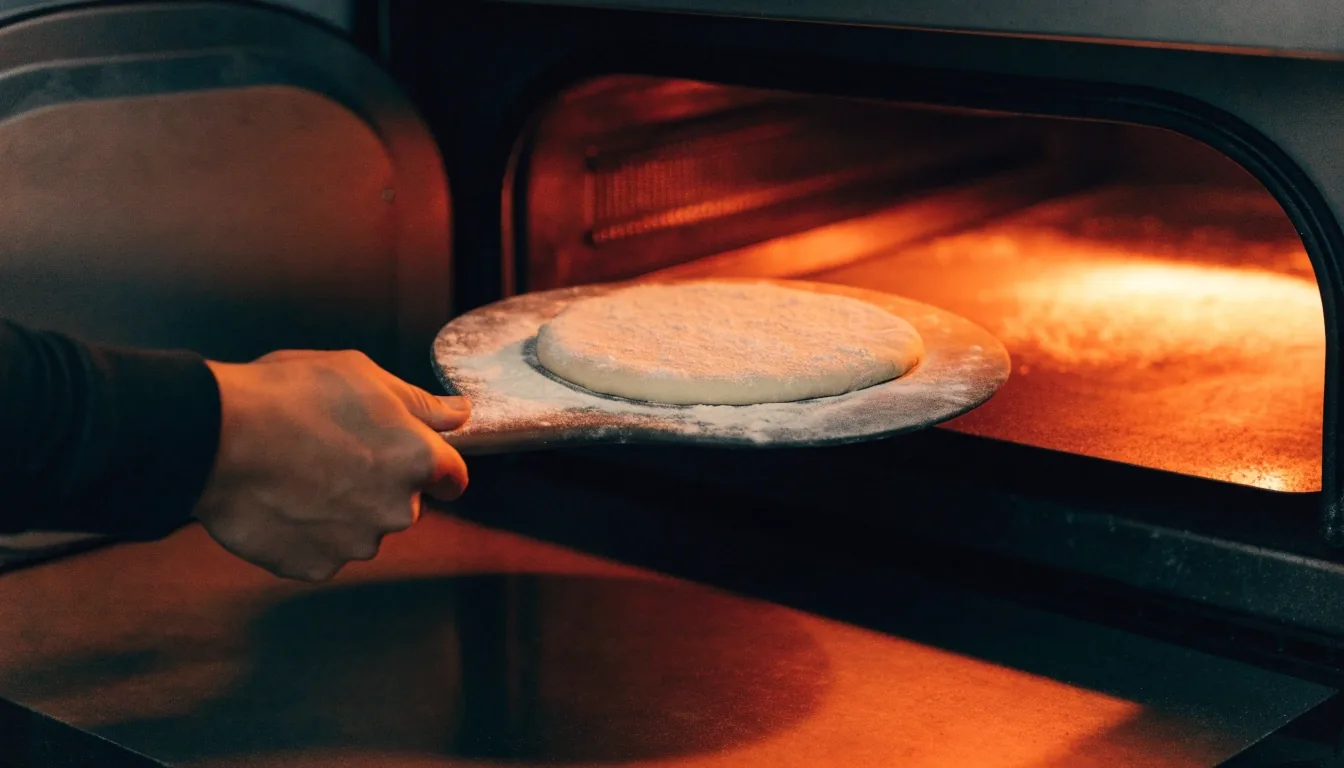
A high-heat bake means getting your oven and your stone or steel as hot as they will go and preheating long enough that the surface is genuinely hot, not just warm. Most home ovens top out around 500-550°F.
A baking steel transfers heat faster than a stone, which helps with char. If your oven has a broiler, a minute or two under it at the end can give you blistering you would not get otherwise.
Preheat past the beep
An oven signal means the air is hot, not the surface. Give the stone or steel another stretch of time so the dough hits real heat.
Broiler finish
Top heat at the end blisters the cheese and the crust rim in a way the bake alone will not, as long as you watch it the whole time.
Dry dough, hot surface
A damp dough on a lukewarm plate sticks and steams. Flour the peel, move quickly, and launch onto the hot surface.
Stone or steel: what changes
Both sit in the same oven and both beat a bare sheet pan. The difference is how fast each one moves heat into the dough, and that changes how the crust browns.
A pizza stone
A pizza stone heats slowly and holds heat well. It is forgiving to preheat and easy to leave in the oven between bakes. If you make pizza occasionally, a stone is fine and easier to store.
- +Stores easily and handles an unhurried preheat.
- +Gentler on the bottom of the crust.
- −Slower to recover between consecutive pies.
A baking steel
A baking steel heats faster and transfers heat more aggressively, which is closer to what a commercial oven does. It is heavier, and it wants the shelf space, but it bakes one pie after another without losing pace.
- +Faster recovery when you bake in a row.
- +More bottom char in a shorter bake.
- −Heavy, and it takes longer to come up to temperature.
If you bake often, a steel is worth the shelf space. If you bake occasionally, a stone is fine and easier to store. Either way, preheat longer than feels reasonable.
Sauces, cheese, and the balance between them
Sauce balance is the difference between a pizza that tastes like tomatoes and cheese separately and one that tastes like a single thing. Too much sauce and the crust goes soggy. Too little and the pie tastes dry.
The book gives amounts by weight rather than by spoonful, which makes the balance repeatable instead of a matter of luck. A kitchen scale costs less than a failed dinner, and it removes the guesswork from every pie after the first.
Toppings by style
Neapolitan toppings are light: a little sauce, mozzarella, basil. New York handles more, including pepperoni and sausage. Detroit-style works with cheese to the edges and sauce on top or underneath. Chicago deep dish layers differently again.
Matching toppings to style is not snobbery. It is what keeps the crust from collapsing under the weight. A thin, wet dough under a pile of vegetables is a structural problem before it is a flavor one.
See the pizza stylesTechniques worth practicing separately
Stretch and fold, shaping without a rolling pin, and preheating a stone properly are all skills you can practice on their own. Do them a few times with a basic dough before you attempt a full recipe. It is faster than learning everything at once, and the results show up immediately.
- 1 Stretch and fold. Wet your hand, lift one side of the dough, and fold it over the middle. Turn the bowl and repeat. Four rounds, then rest.
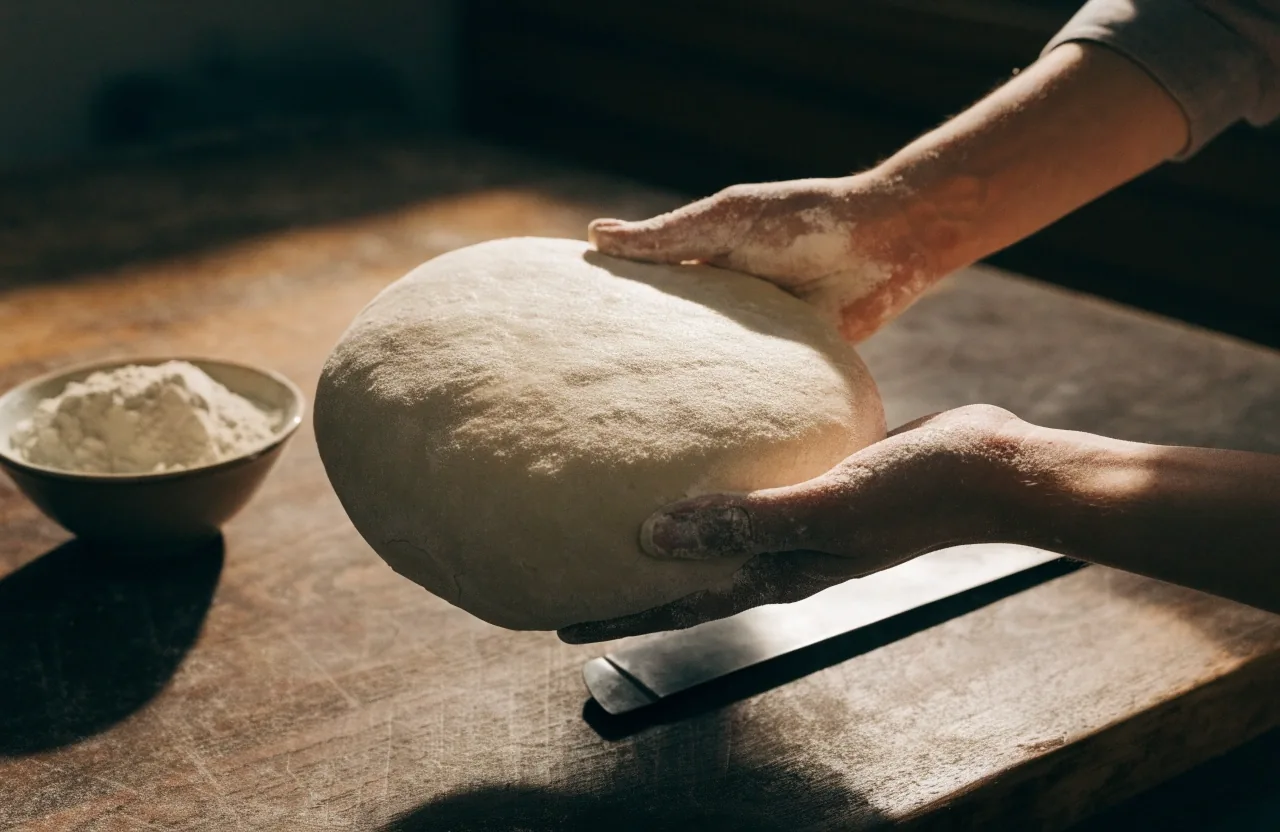
- 2 Shape by hand. Press from the center outward and leave the rim alone. A rolling pin flattens the gas you spent hours building.
- 3 Preheat the stone. Put it in cold, bring the oven to temperature, then wait. The surface should be hot enough that flour darkens on contact.
Why practice beats a full recipe first
When you learn a whole pie at once, one mistake hides the others. Isolating the shaping or the preheat means you can feel what changed the moment you correct it, and the fix carries into every style you cook afterward.
Questions cooks ask before they start
Short answers to the things that come up most often in a home kitchen.
Do I need a scale, or can I use measuring cups? +
Cups work for a first attempt, but a scale is what makes the sauce and cheese balance repeatable. The book gives amounts by weight for exactly that reason. Weighing also means you can scale a recipe up or down without converting anything.
My crust came out pale on the bottom. What went wrong? +
Almost always the surface, not the dough. The stone or steel was not hot enough yet, or the oven signal came too early. Give it more time, and check that nothing sits between the dough and the hot surface.
Can I use the pan pizza method with a round skillet? +
Yes. A cast-iron skillet holds heat well and gives a crisp bottom. The dough is the same relaxed mix; you just press it to fit the shape of the pan and let it rise again before baking.
Is the sauce here the same as in the book? +
It is the same method. The book adds the measured amounts, the variations for different styles, and the notes on which tomatoes to look for at the store. This page gives you the technique so you can taste it first.
What should I practice before a Neapolitan-style bake? +
Shaping by hand and preheating properly. Neapolitan pies are soft and fast, so they punish a dough that has been overworked or a surface that is not hot. Practicing those two on a basic dough is the quickest way in.
Cook one, then decide
Try the pan pizza or the basic sauce this week. If the method works in your kitchen, the full collection takes it further — more styles, more doughs, and the measured amounts behind every pie on this page.